Q&A: 937.640.1040
OFFICE HOURS:

Mon–Fri 9:00 AM–5:00 PM (visitors by appt.)
CLOSED Sat–Sun

Login
$0.00 0

Cart

No products in the cart.

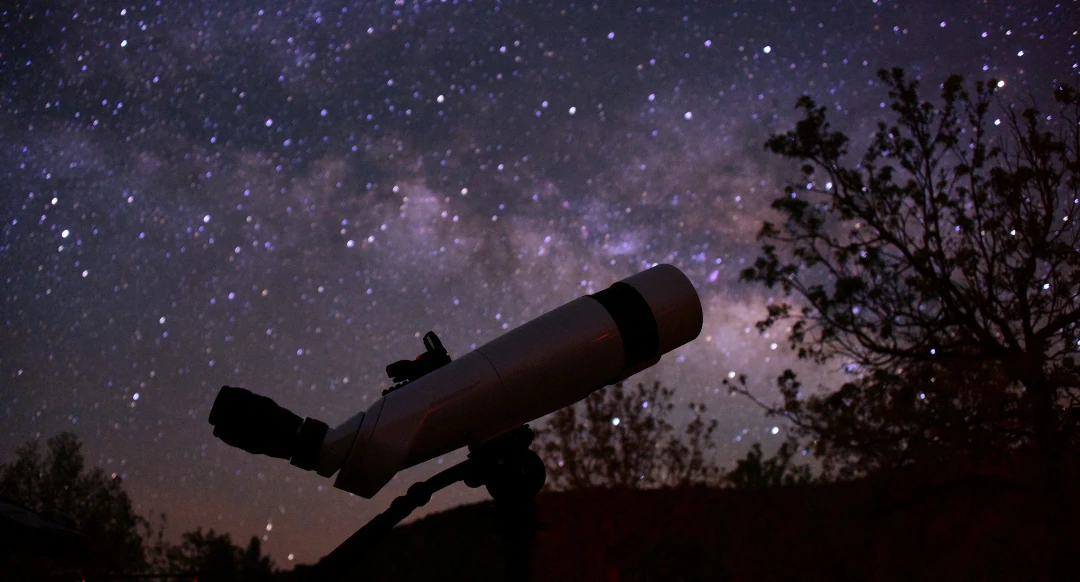
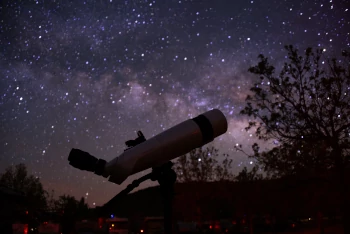
An Oberwerk binocular telescope under the stars

Best Binoculars for Astronomy (2026 Guide)

How to Choose the Right Magnification, Aperture, and Setup for Your Observing Style

Quick Answer

The best binocular is the one you will use most often.

For astronomy, that usually comes down to choosing the right balance of magnification, aperture, and how much setup you’re willing to deal with. Most people start with 10×50 binoculars for handheld use, then move to 15×70 or larger on a tripod for deeper views.

Why Binoculars Work So Well for Astronomy

Binoculars are one of the simplest and most effective ways to explore the night sky.

They require minimal setup, provide a wide field of view, and allow you to observe with both eyes. That makes them ideal for:

  • Scanning the Milky Way
  • Viewing large star clusters
  • Observing the Moon
  • Locating objects before switching to a telescope

For many observers, binoculars remain a primary observing tool, not just a starting point.

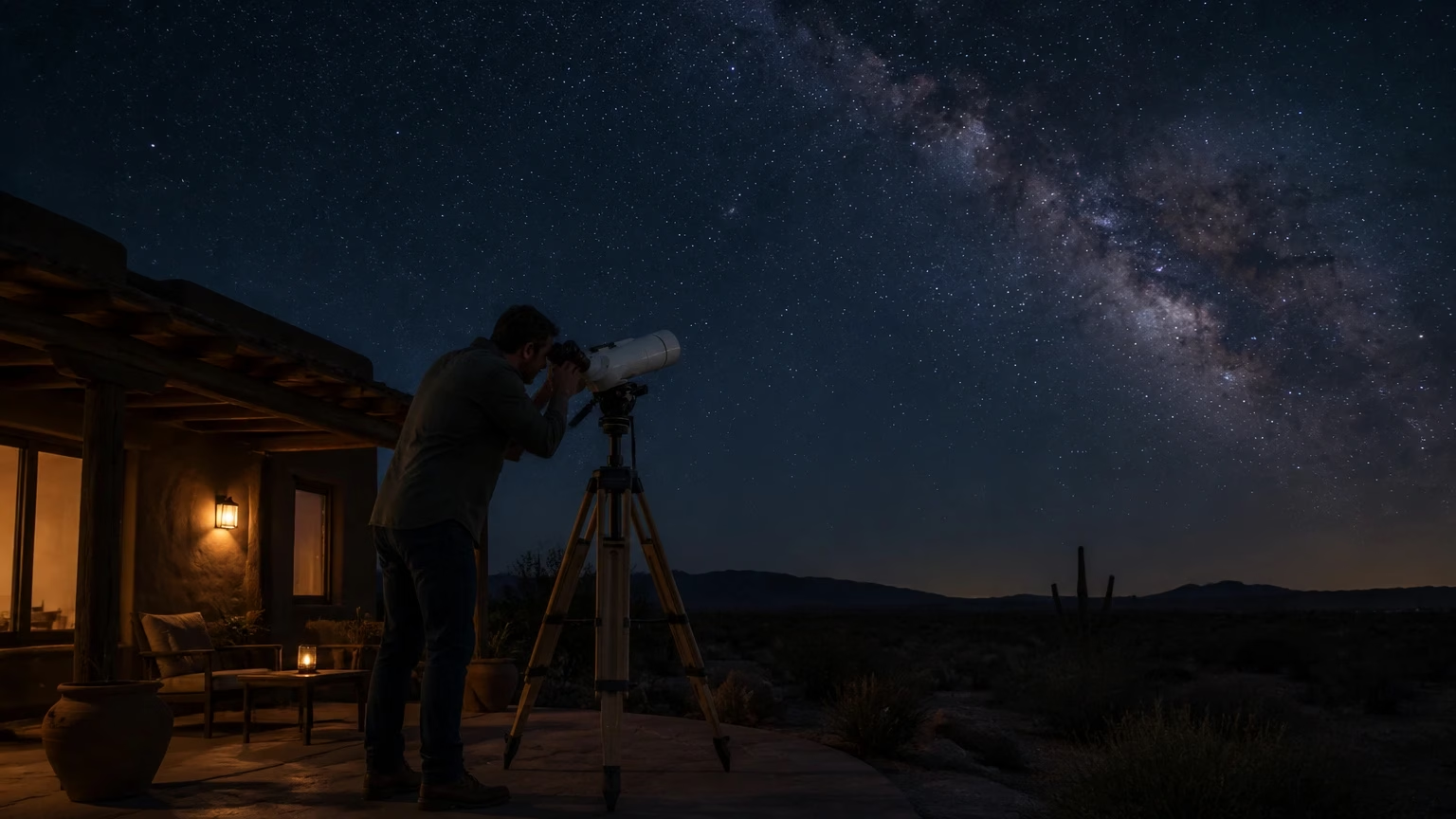
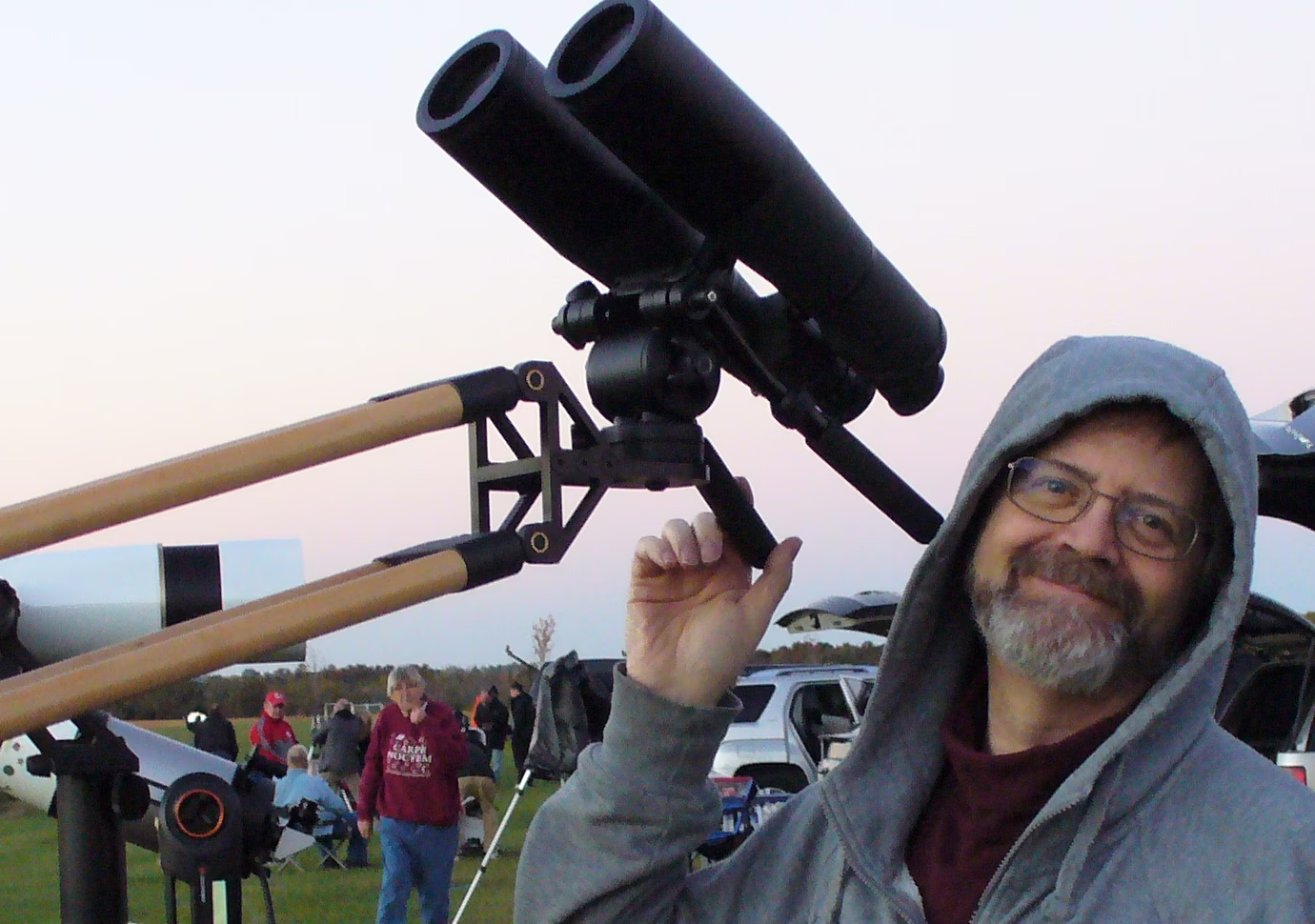
An Oberwerk binocular telescope used for astronomy

Hand-Held vs. Mounted Binoculars

The first decision you need to make is whether you want a hand-held or mounted setup. Choosing between handheld and mounted observation is a personal decision.

  • Handheld → faster, easier, more convenient
  • Mounted → more capable, but requires setup

Hand-Held Observation

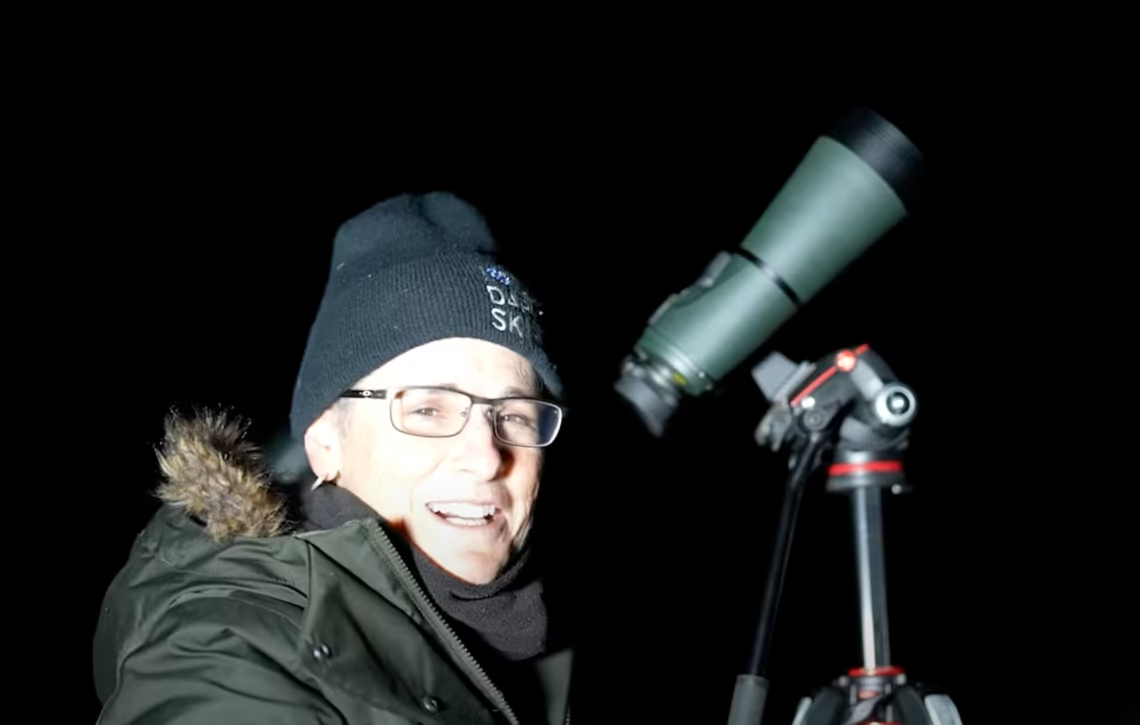
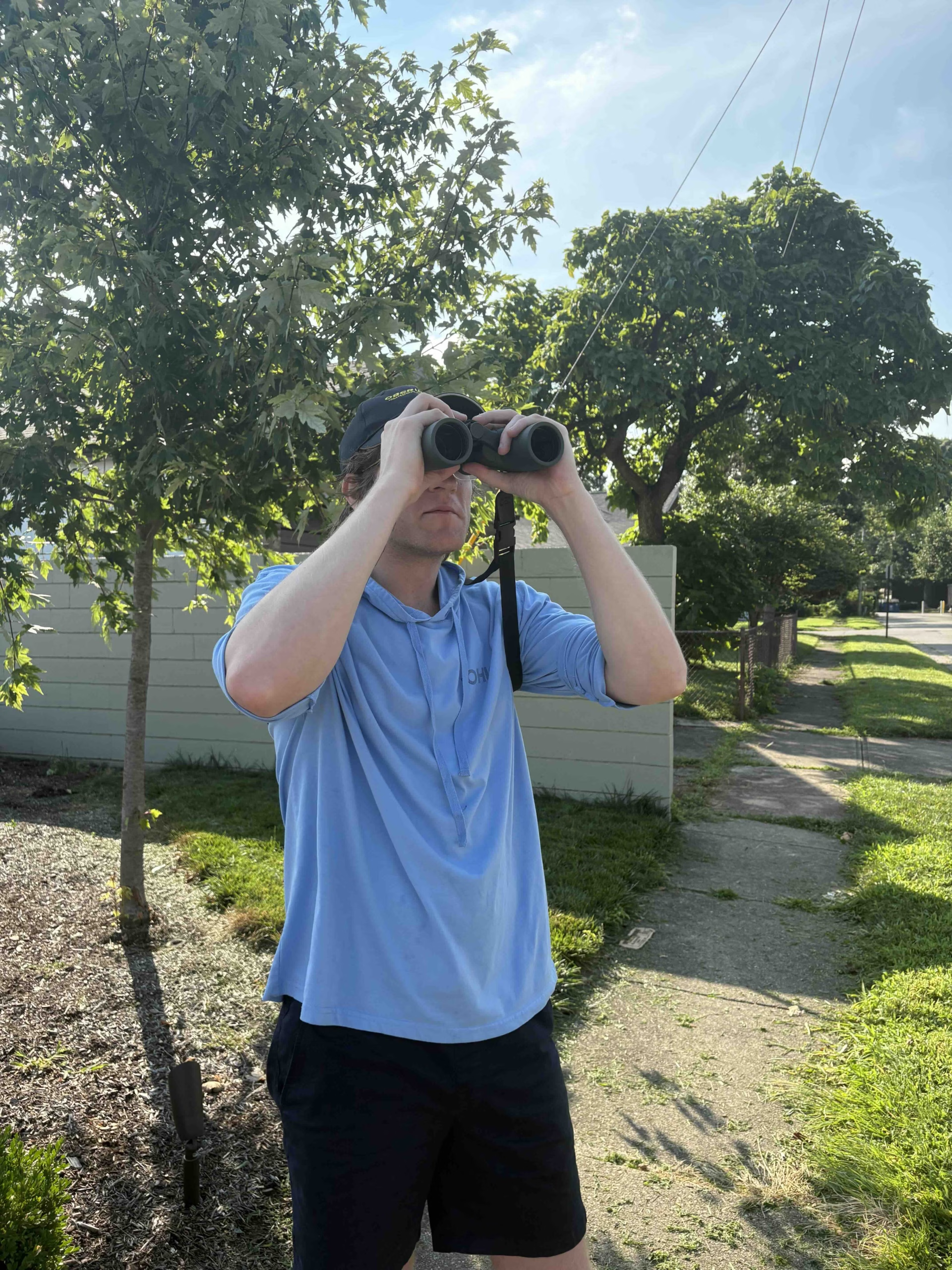
A delighted Oberwerk customer viewing through an Oberwerk 8x32 Special Edition (SE) binocular

It’s important to understand that a binocular magnifies not just the image, but also the natural shake of your hands.

  • Most people can comfortably hand-hold up to 10x–12x magnification
  • As magnification increases, even small movements become noticeable
  • Stability decreases during longer viewing sessions

For many users, especially as we get older, 8x to 10x is the most comfortable range for handheld use.

The advantage is simplicity:

  • No setup
  • Easy to grab and use
  • More frequent observing

Shop Hand-Held Models

Mounted Observation

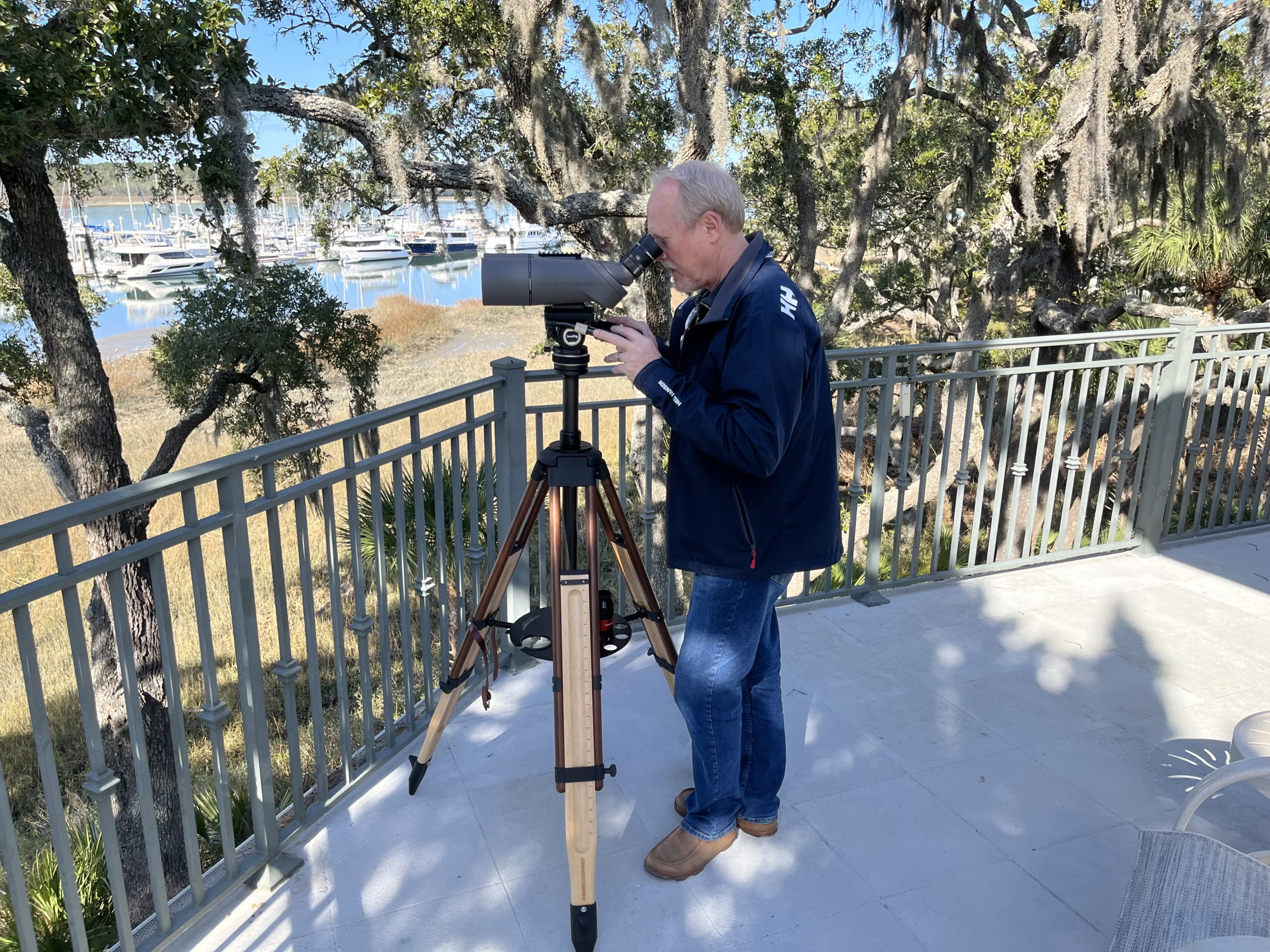
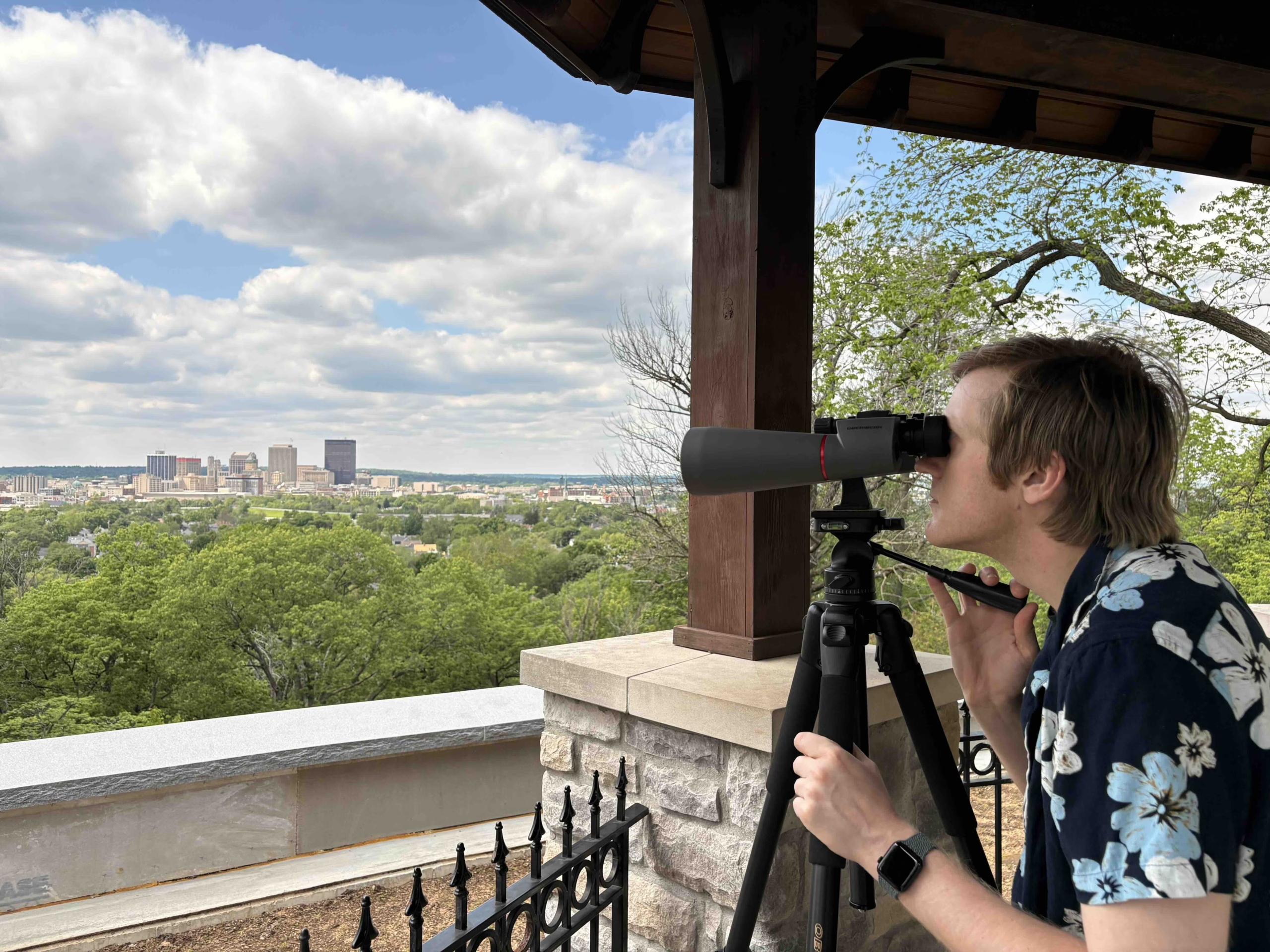
Larger binoculars require a solid tripod and mount to perform properly.

  • 15x and above should be considered mounted binoculars
  • A tripod stabilizes the image and dramatically improves detail
  • Extended viewing becomes much more comfortable

This is where binocular astronomy really opens up.

Shop Mounted Models

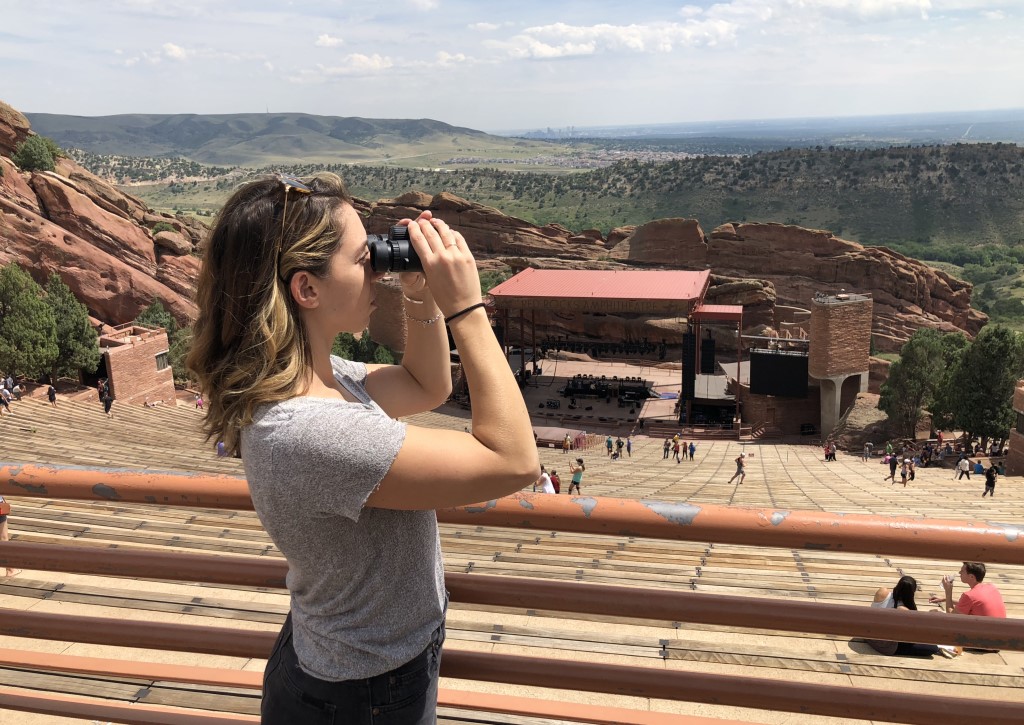
Tula Big Adventures Night

Magnification & Aperture

Once you’ve decided between a hand-held and mounted setup, the next step is understanding magnification and aperture – the two numbers that define how a binocular performs.

Binoculars are typically labeled with a pair of numbers, such as:

10×50

  • The first number (10x) is the magnification.
    This tells you how much closer objects appear compared to the naked eye.

  • The second number (50) is the aperture, measured in millimeters.
    This refers to the diameter of the front lenses, which determines how much light the binocular can collect.

These two numbers work together:

  • Magnification controls how large objects appear

  • Aperture controls how bright and detailed those objects look

Choosing the right combination is about balancing ease of use, brightness, and level of detail—based on how you plan to observe.


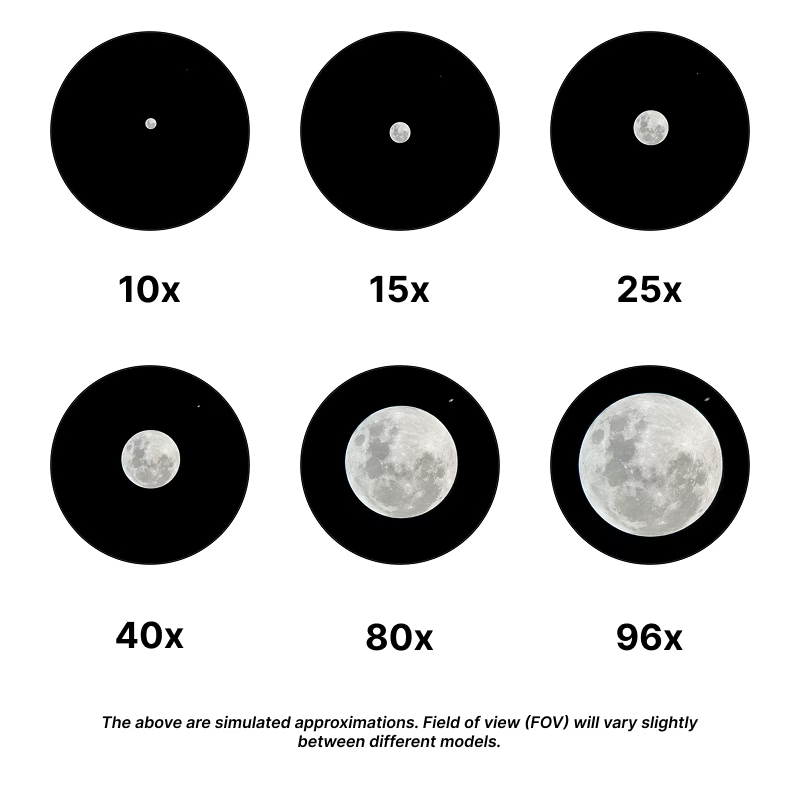
Magnification

Most people assume more magnification is always better, but in astronomy, that’s not always true.

As magnification increases:

  • Field of view becomes narrower
  • Objects become harder to locate
  • Stability becomes more critical

Real Example

The North American Nebula is roughly 3° wide.

  • A 20x binocular (≈ 3.2°–3.5° FOV) can show it fully
  • A 25x binocular (≈ 2.4°–2.6° FOV) cannot

Higher magnification doesn’t always give a better view—it depends on the object.

Practical Recommendation

For your first binocular:

Start between 8x and 15x

  • Wide enough field of view
  • Easier to find objects
  • More forgiving to use

Once you’re familiar with the night sky, higher magnification becomes more useful.

Aperture

Aperture determines how much light the binocular collects, and in astronomy, more light reveals more detail.

  • 50mm → portable, general use
  • 70–80mm → noticeably brighter
  • 100mm+ → maximum light gathering

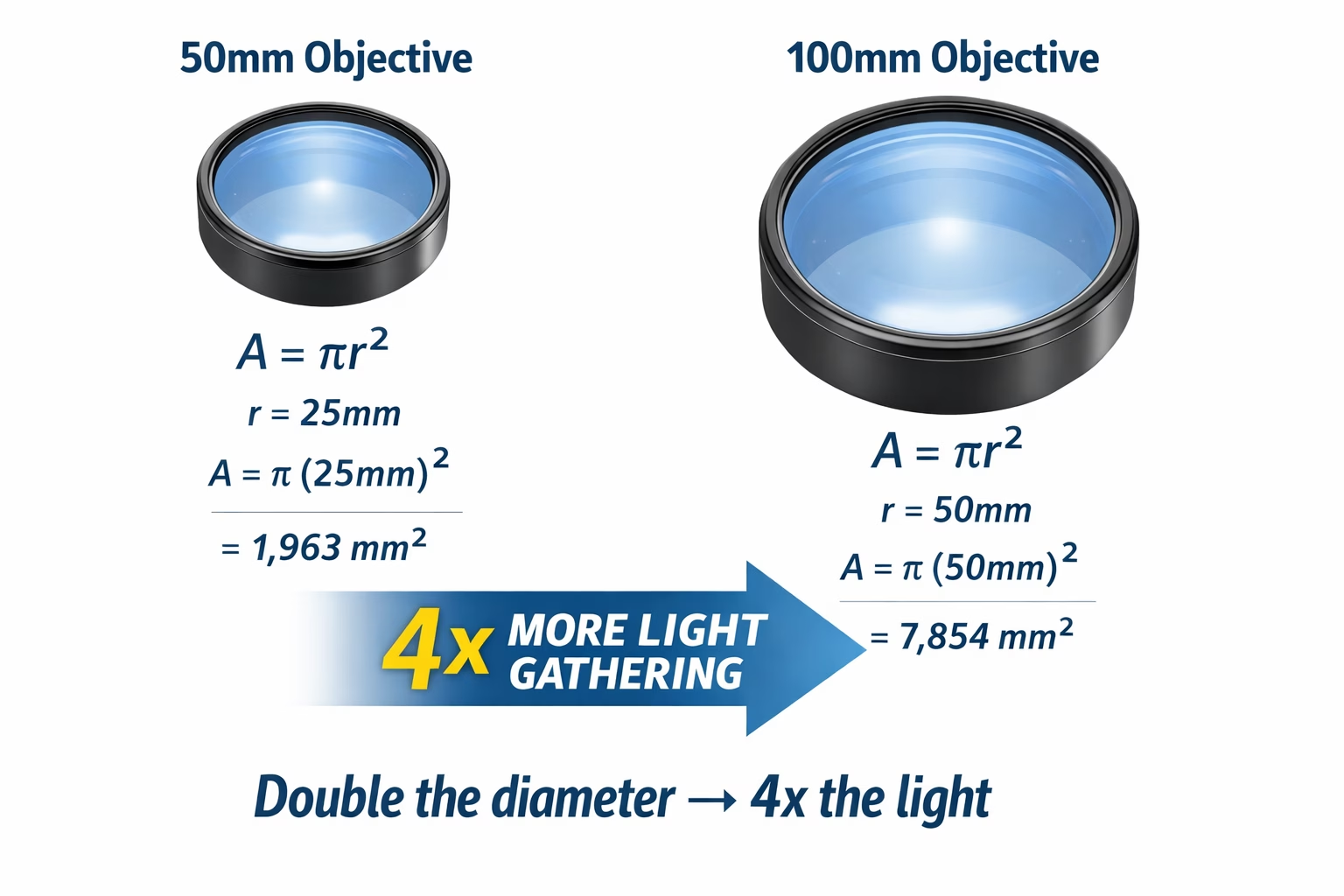
The difference between sizes is larger than it might seem.

A 100mm binocular doesn’t just gather twice as much light as a 50mm, it gathers about four times as much.

Doubling the size doesn’t double performance—it multiplies it.

In practice:

  • Fainter objects become visible
  • Nebulae and galaxies show more structure
  • Star fields appear richer

The tradeoff is size and mounting requirements.

Oberwerk Binocular Lines

Once you’ve decided on magnification and aperture, the final step is choosing the level of optical performance and build quality that fits your needs. 

All Oberwerk binoculars are FMC (Fully Multi-Coated) using the finest broadband multi-coatings, which minimizes reflections and maximizes light throughput across the entire visible spectrum (380-450 nm).  All Oberwerk binoculars have BAK4 prisms, which ensure maximum brightness across the entire FOV (Field of View).

All Oberwerk binoculars are waterproof and nitrogen-filled.  The nitrogen fill displaces air (which contains water vapor), which prevents the binocular from internally fogging when temperatures quickly drop.

All Oberwerk binoculars are optimized for maximum-possible eye relief by minimizing eyepiece lens recess.  This means those that must (or simple prefer) to wear eyeglasses while viewing should be able to see the entire FOV.

Explore Series

From $110 to $280.

Available models – 6.5×32, 8×42, 10×50, 15×70, 20×80

The Explore Series is our entry-level line, designed for great performance at a modest price.  Intended for astronomy, but also great for daylight viewing.  Explore models have all the features most people are looking for (as detailed above).  Construction is a combination of aluminum and polycarbonate, for strength and light weight with less cost.  Eyecups are twist-up style, which make it easy to maintain optimum eye position.  The 6.5×32 has an extra-wide IPD (Inter-Pupillary Distance) range, which goes as narrow as 51mm.  This makes it one of the only binoculars on the market that young children can actually view through using both of their (closely-spaced) eyes.  But it also goes wide enough that any adult can use it as well.  The larger 15×70 and 20×80 models will require a tripod in order to obtain a steady view.

Best for:

  • Beginners
  • General-purpose use

Shop the Explore Series → 

Deluxe Series

From $210 to $600

Available models: 10×50, 15×70, 20×65 ED, 20×80, 25×100

The Deluxe Series is a step up mostly in construction quality, featuring rugged all-aluminum construction.  Optics are also slightly better, with better sharpness to the edge of the FOV and less chromatic aberration (false color fringing).  The 20×65 ED is a special model that features FK-61 ED glass, along with an extra-long focal length, which together provide a view that is free from chromatic aberration.  Deluxe models, with the exception of the 10×50, will require a tripod.

Best for:

  • Serious amateur astronomers
  • Users who want a long-term, rugged solution

Shop the Deluxe Series → 

SE Series

From $300 to $370

Available models – 8×32, 10×42, 12×50

In 2014, Nikon discontinued their highly-regarded Nikon SE (Superior E) Series, due to the increasing popularity of roof-prism type binoculars.  Many fans of the Porro-prism design were disappointed with that decision, so we came out with our take on the Nikon SE’s.  Our SE’s (for “Special Edition”) have a few improvements over the old Nikons, which include FK-61 ED glass, a wider FOV, magnesium-alloy construction, and like all Oberwerk binoculars, they’re waterproof and nitrogen-filled.  If you don’t need the compact shape and lighter weight of the roof prism Sport ED’s, SE models can offer the same level of optical performance for less cost.

Best for:

  • Hand-held observers looking for the best optical quality at a lower cost

Shop the SE Series → 

Sport Series

Oberwerk Sport models are of the roof-prism design, which means the eyepieces are inline with the objectives, making for a much more compact shape with lighter weight. The Sport’s compact shape makes them ideal travel companions.

The Sport Series has several different product types.

Sport HDII Monocular

Cost – $139.95

Available models: 8×32, 10×32

The Sport HD II’s are monoculars- which is basically one half of a binocular, for use with one eye.  The HD II’s also have FK-61 ED glass, for highest-possible image quality.  Monoculars are great because they’re so small, and polycarbonate construction makes them ultra-lightweight.  They can be carried in a pocket, fit in the palm of your hand- and they focus as close as 4 feet!  When used in theaters, concert halls, and stadiums, they’re less conspicuous than a binocular that requires both hands.

Best for:

  • Those who need a compact high-quality optic that can fit in their pocket

Sport ED

Cost – $369.95

Available models: 8×42, 10×42

For many years, the highly-regarded Sport ED’s were our finest roof-prism binoculars.  The new Sport APO’s have taken that crown, but the Sport ED’s are still an outstanding value.  Utilizing FK-61 glass, CA (chromatic aberration) is close to zero. With striking red-anodized aluminum focuser and right diopter ring against an olive-green rubber armored magnesium-alloy body, they look like nothing else.  For serious birdwatchers on a budget, Sport ED’s are hard to beat.

Best for:

  • Amateur astronomers who also enjoy birding / nature observation
  • Those looking for a compact travel binocular

Sport APO

From $700 to $800

Models to be available April 2026 – 6.5×32, 8×32, 10×32. 8.5×40, 10×40

The ultimate roof prism binoculars are here.  Designed to compete against the famous European brands that cost thousands of dollars.  Most Sport APO models use FCD100 SD glass- the same SD glass that’s used in our most expensive XL Series binocular telescopes.  Some Sport APO models use double ED glass, which achieves the same apochromatic CA-free view as SD glass.   Sport APO’s have exceptionally-wide FOV’s, with field flatteners that provide incredibly-sharp edge performance- two features that are normally mutually exclusive.   The right diopter adjustment is behind the center focuser, and because the diopter compensation is internal, eyepieces remain at the same height no matter the diopter setting.  With magnesium alloy construction, Sport APO models are also noticeably lighter than their more expensive competitors.

Best for:

  • Advanced observers looking for best-in-class hand-held optics

Shop the Sport Series → 

Ultra Series

The Ultra Series is our top-of-the-line fixed-power binocular series. Optically, they are a considerable step up from the Deluxe line.

The Ultra Series are our highest-quality conventional-style binoculars, and are only surpassed by our XL Series binocular telescopes.  All Ultras have rugged magnesium-alloy construction, with a heavier rubber armor.  All have FK-61 ED glass to eliminate chromatic aberration, field flatteners for increased sharpness to the edge of the FOV, and precise individual focus.  A tripod will be required for the larger Ultra models.

Best for:

  • Advanced observers
  • Users who want maximum optical performance

Shop the Ultra Series → 

XL Series Binocular Telescopes

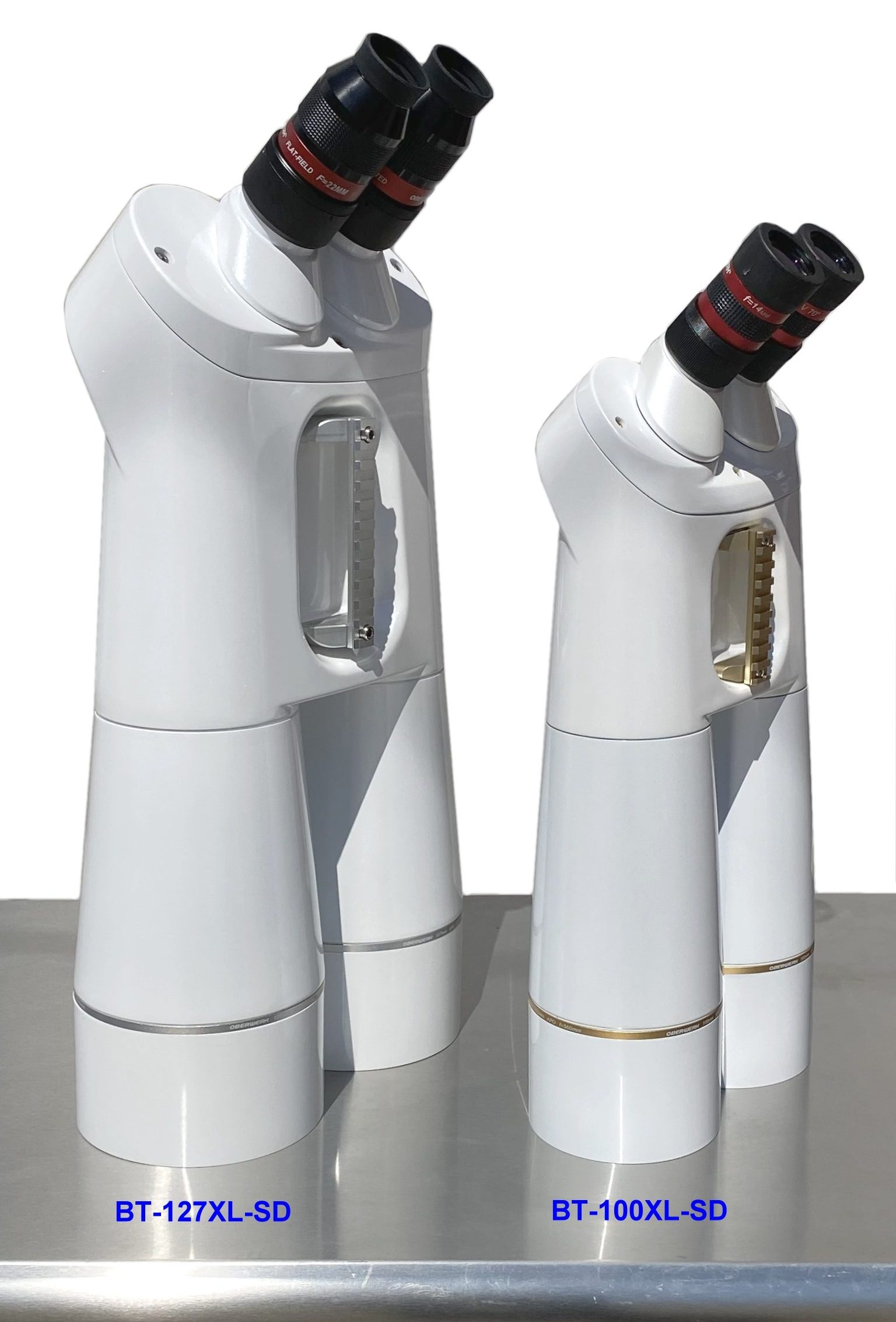
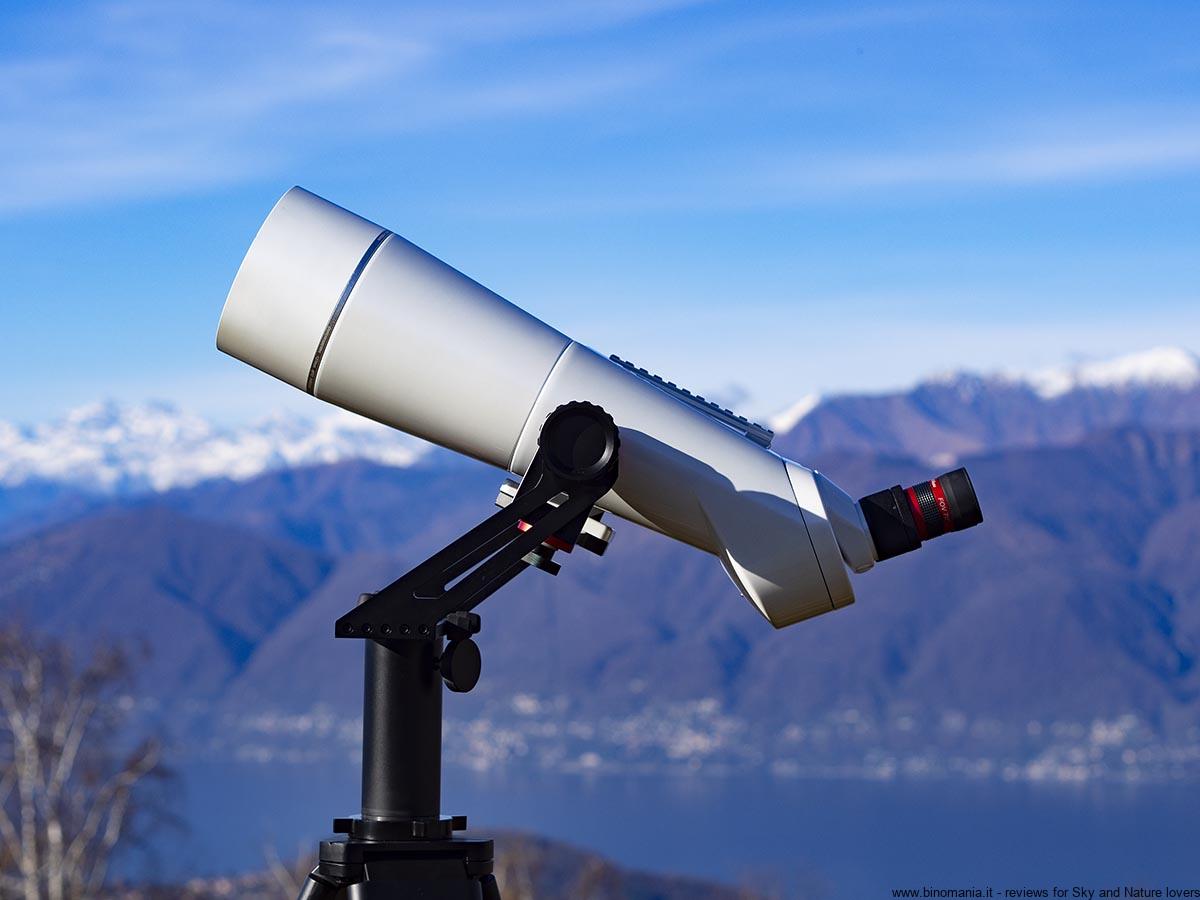
Our flagship products, the world’s finest binocular telescopes, are available in 11 different models in 5 objective sizes- 70mm, 82mm, 100mm, 120mm, and 127mm.  A binocular telescope has interchangeable eyepieces, and it’s the eyepieces that determine magnification.  Just about any 1.25″ telescope eyepieces on the market can be used, however Oberwerk offers three wide-field eyepiece choices that are optimized for the XL’s.  Our mid-power eyepieces are included, low-power and high-power eyepieces are optional.  Actual magnification range is determined by the objective size of the binocular, and that range is progressively higher as objective size goes up.   All XL’s have magnesium alloy construction, and they are engineered to be the lightest-weight binocular telescopes on the market.   Two glass types are available- ED (FK-61), which eliminates the majority of CA, and SD (FCD100), which eliminates virtually all CA, up to the recommended magnification limits.   All have 45-degree viewing, which makes viewing to the horizon or viewing to zenith (directly overhead) equally comfortable.   All ED and SD models have a lustrous Luna Pearl painted finish.  TE (Tactical Edition) models come with a dull gray textured finish, and are intended for hunting, military usage, and long-range target shooting.  All TE’s have SD glass, and come with weatherproof travel cases.

Best for:

  • Dedicated observers
  • Maximum capability

Shop the XL Series →

Tripod Considerations

When choosing a tripod, two factors matter most:

Load capacity
Your tripod’s load capacity should ideally exceed the weight of your binocular. More stability means better views.

Height
Most tripods are designed for photography and are not tall enough for astronomy, especially when viewing near the zenith (straight overhead).

Many observers prefer to stand, and a tripod that extends high enough for comfortable viewing is critical. 

Oberwerk offers a range of tall, stable tripods designed specifically for astronomy.

Shop Oberwerk Tripod Options →

So, What Is The Best Binocular For Astronomy?

The short answer is that there is no one-size-fits-all binocular. The best binocular for astronomy isn’t the one with the highest specifications, it’s the one that fits your observation needs and preferences.

If you want help deciding which model is right for you, please don’t hesitate to reach out!

Contact Us→

Oberwerk Corp.
3880 Kettering Blvd.
Dayton, OH 45439

937.640.1040 [email protected]

Join the Oberwerk Family

Subscribe to our newsletter & follow us on social media

©2026 Oberwerk Corporation
POWERED BY

We’ve got you covered.

Shipping Protection gives you peace of mind while saving you time and money.

  • SHIPPING PROTECTION

    Coverage in case your package is damaged in transit, stolen, or doesn't arrive.

  • INSTANT ISSUE RESOLUTION

    Get a refund or replacement in just a few clicks.

  • 24/7 CLAIM SUPPORT

    Route is here for you whenever an issue arises — with an average response time of under an hour.

Don't have an account? Click here to register.

Secret Link